Customers today expect to connect with businesses anytime, anywhere—whether through voice calls, chat, email, WhatsApp, or social media. And while digital channels are growing fast, the phone is still one of the most trusted ways for customers to reach support.
This makes Interactive Voice Response (IVR) a critical part of the omnichannel customer experience. Once seen as a basic call-routing tool, IVR has now evolved into an intelligent system that connects smoothly with digital touchpoints, ensuring every interaction is seamless and consistent.
What is IVR?
Interactive Voice Response (IVR) is an automated phone system that interacts with callers through pre-recorded voice menus and keypad or speech inputs. Instead of waiting for a live agent, customers can navigate options, access information, or get routed to the right department.
Examples include:
- Checking order or delivery status
- Retrieving account details
- Making payments
- Being connected to the right support agent
While traditional IVR menus often felt rigid or frustrating, modern IVR systems are powered by AI, personalized, and integrated with customer data—making them far more effective.
How IVR fits into an omnichannel experience
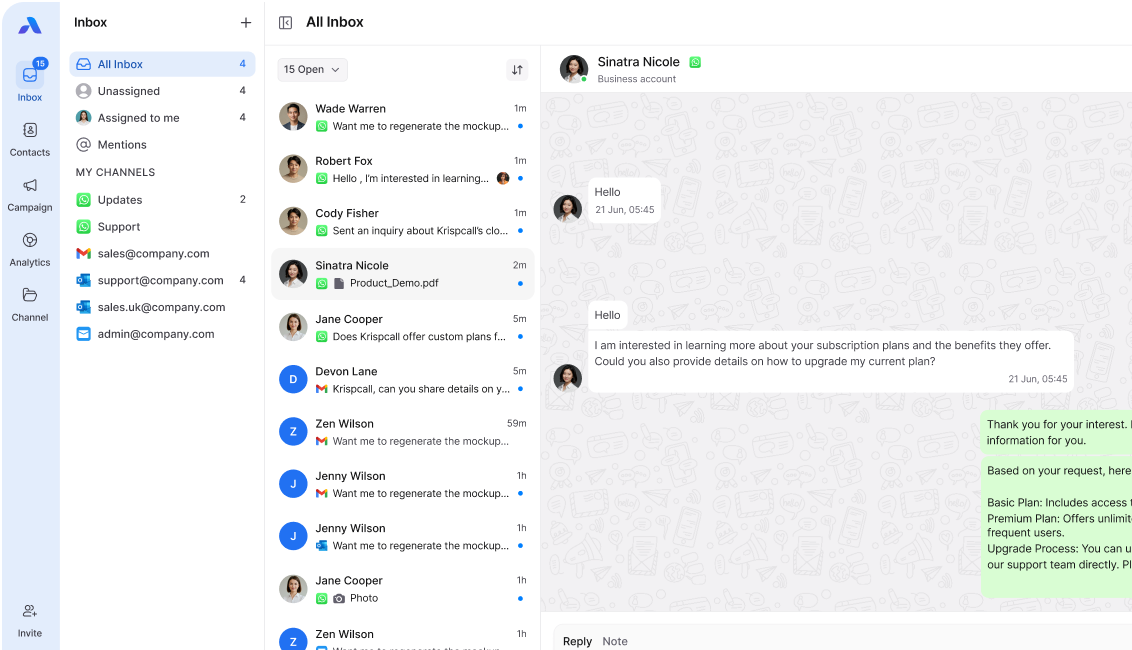
Omnichannel customer experience means a conversation can start in one channel and continue in another—without the customer having to repeat themselves. IVR plays a key role in making this possible for voice interactions.
Here’s how IVR strengthens omnichannel communication:
- Seamless routing: Calls are directed to agents who already have access to the customer’s previous chats, emails, or social media interactions.
- Personalized service: IVR can recognize repeat callers, greet them by name, and adapt options based on their history.
- Smart self-service: By connecting with knowledge bases or AI chatbots, IVR enables customers to find answers on their own before escalating.
- Omnichannel continuity: Information collected through IVR—like account numbers or issue type—is shared with agents across other channels, eliminating the need for repetition.
Benefits of IVR in an omnichannel strategy
- Faster problem resolution
Customers either get instant answers or are routed to the right person without multiple transfers. - Reduced agent workload
IVR filters routine requests, freeing agents to focus on complex issues. - Consistency across channels
A unified experience ensures customers feel recognized whether they call, chat, or message. - 24/7 availability
Self-service IVR ensures customers get support even outside business hours. - Better insights
IVR collects valuable data on customer behavior, call patterns, and intent, helping improve overall omnichannel strategies.
Best practices for using IVR in omnichannel customer experience
- Keep menus short and simple so callers don’t feel stuck in endless loops.
- Always provide an option to speak to a human when self-service isn’t enough.
- Integrate IVR with your CRM to give agents full visibility of customer history.
- Use speech recognition and AI to make interactions more natural and less mechanical.
- Continuously monitor and refine IVR flows using analytics and customer feedback.
Final Thoughts
IVR is no longer just a “press 1 for sales, press 2 for support” system. In an omnichannel world, it has become a powerful tool that connects voice with digital channels, ensures smooth handoffs, and delivers faster, more personalized experiences.